Man Overboard: Finding Is Half the Job, Recovery Is the Other Half
Why the MOB button doesn't save anyone, how much a wet person weighs, how horizontal recovery differs from vertical, and how to test your method before you need it.
On most boats, the "man overboard" drill ends where the real difficulty begins: the buoy is retrieved, the dummy is brought alongside, everyone's satisfied.
What comes next is a question most crews can't answer: how to lift an adult out of the water and onto the deck. In April 2026 the UK Maritime and Coastguard Agency updated its guidance on recovering people from the water precisely because this, not the search, remains the weak point.
Why lifting is harder than it looks
A wet person in clothing weighs around 100 kg. Add a soaked jacket, boots, and an inflated lifejacket, and you're lifting a weight that on land would take two people and a running start.
They don't help. After a few minutes in cold water, hands stop gripping. Someone who "can climb up on their own" ten minutes ago can no longer even hold on.
The freeboard is high. From the water to the rail on an average cruiser is one to one and a half metres. That's a wall.
The boat is moving. Even lying to, it yaws, and the person alongside is alternately pressed against the hull and pushed away.
The first thirty seconds
The sequence is always the same, and it matters more than any equipment.
- Shout "man overboard" — loudly, to everyone.
- Throw anything that floats, immediately and toward them.
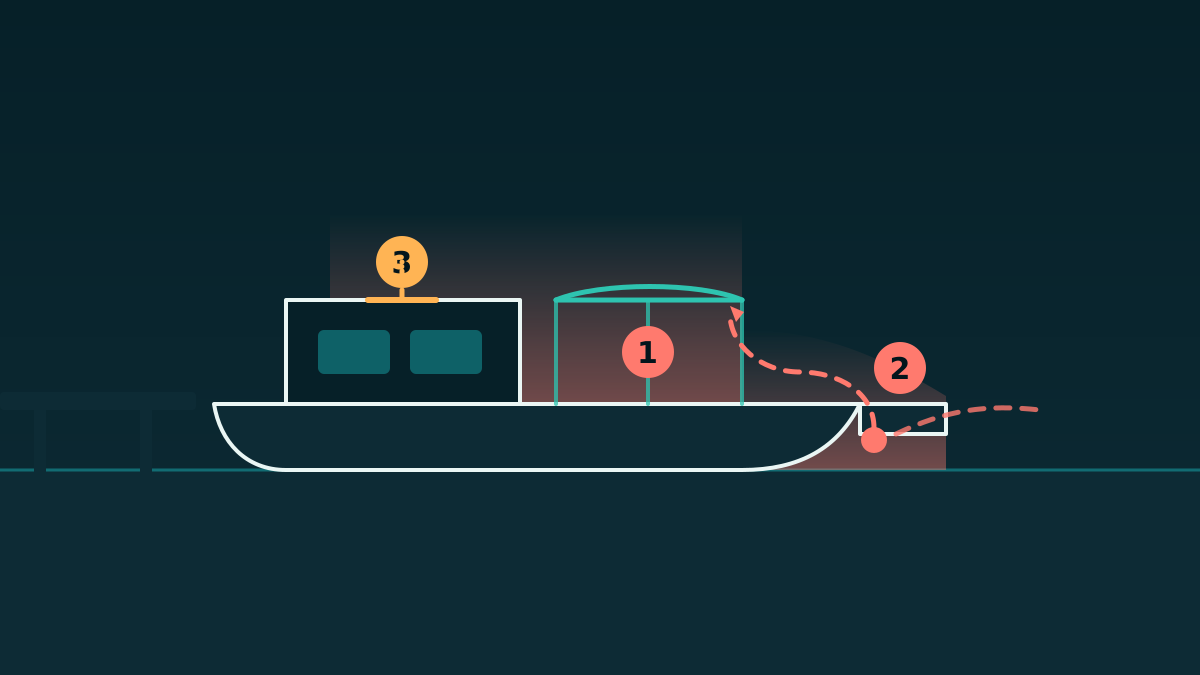
- Assign a spotter. One person's only job is to watch the person in the water and point. Not steering, not throwing, not on the radio — just watching. Losing sight of someone in waves is a matter of seconds.
- Press MOB on the instrument and mark the position.
- Only now, manoeuvre.
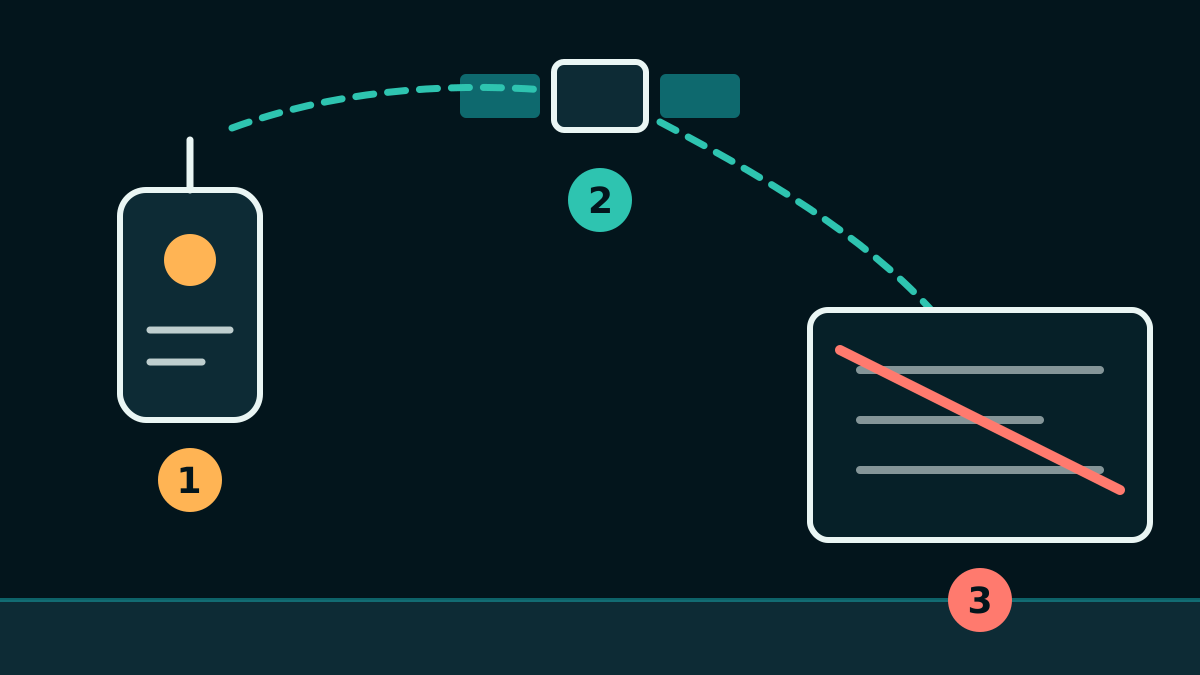
The MOB button is a mark on the chart, not a rescue device. It doesn't lift anyone out of the water or keep them afloat.
Three ways to lift, and all of them need testing in advance
None of them works on every boat — which is why you need to know your own.
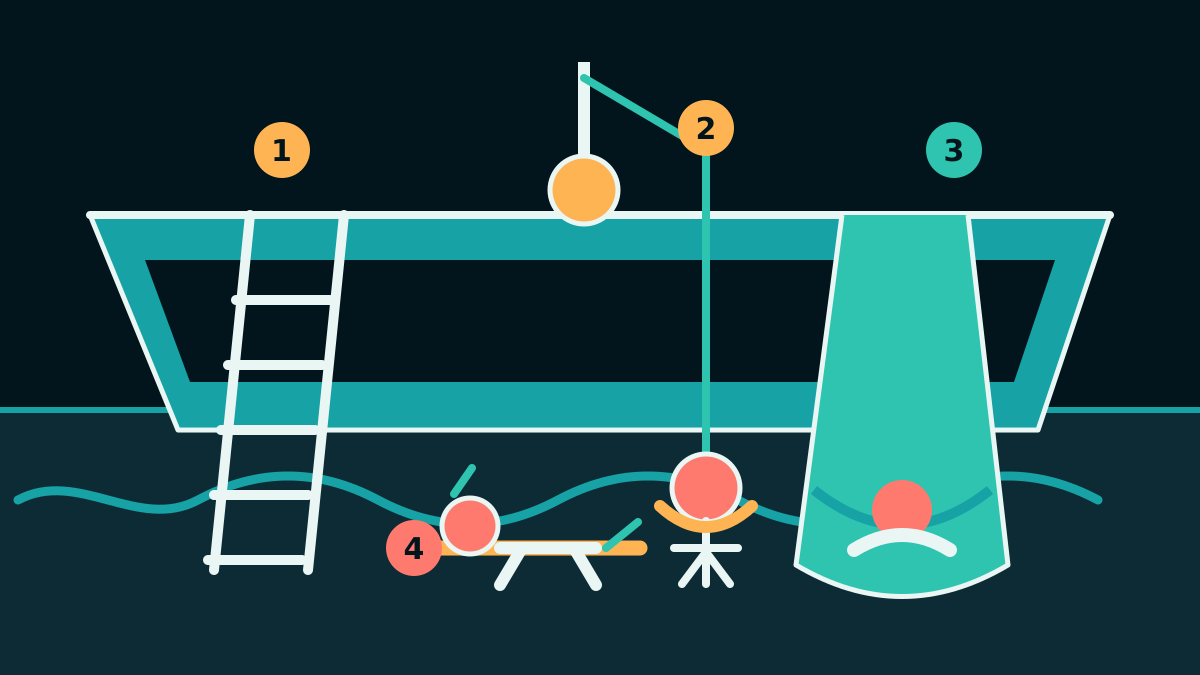
Boarding ladder. Fast, if the person is conscious and the boat isn't rolling. The ladder must reach the water and be deployable from the water: if it only folds down from the top, the person in the water can't reach it.
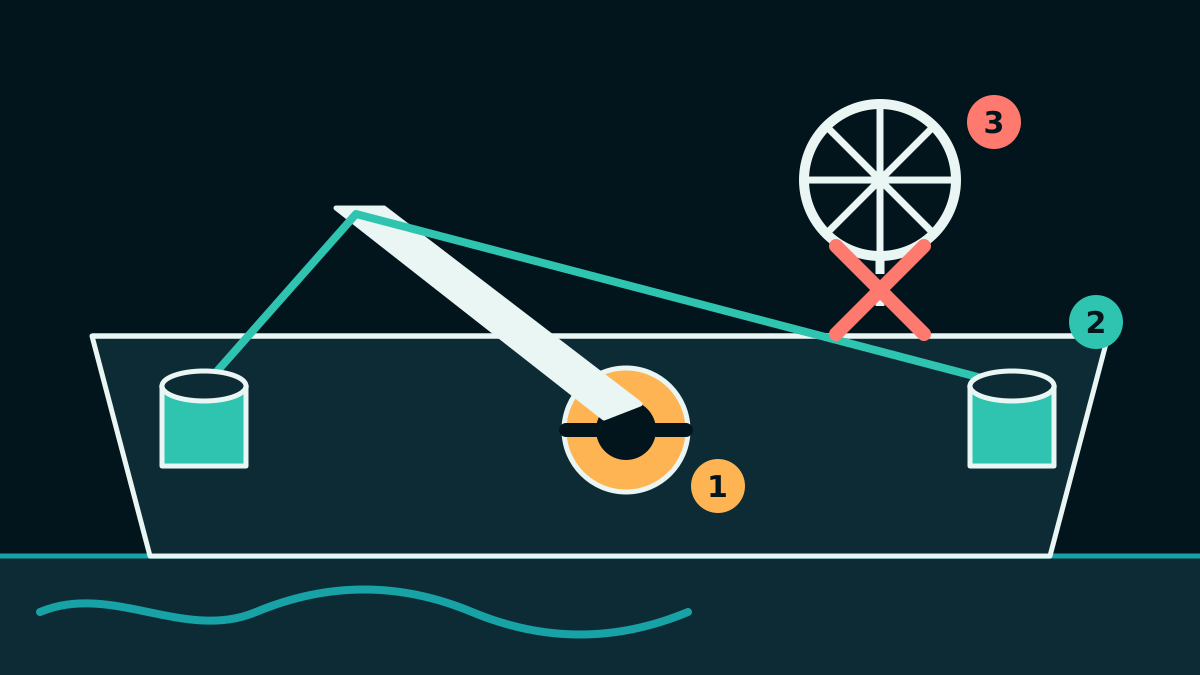
Halyard hoist with a winch. The most reliable option for a large person or someone who's lost their strength. It requires a pre-rigged loop or a lifting harness and rehearsed roles: who winches, who guides, who steadies.
Via sail or net. A jib lowered over the side, or a purpose-made net, forms a cradle the person is rolled into. Slow, but it lifts someone who can't help at all.
What almost never works is pulling someone over the rail by hand. Two fit men can't lift a wet person over a one-and-a-half-metre rail — that becomes clear at the first drill.
Horizontal, not vertical
This is rarely known, and it matters.
Someone who has been in cold water for a long time should be lifted horizontally where possible. The reason is that cold water constricts blood vessels, and a sudden vertical lift causes blood to drain from the heart. This condition is documented and known to rescue services.
In practice: if you have a choice, rig a sling under the arms and under the knees, rather than hauling up by the armpits.
How to run a real drill
Not with a buoy. With a person — one of your own, in a lifejacket, alongside the dock, in warm weather.
- A crew member sits in the water by the hull.
- The crew tries to lift them using the chosen method.
- Time it.
- Repeat with roles swapped: whoever was steering now does the lifting.
After the first such drill, most boats change their equipment. It usually turns out the ladder is too short, there's no sling, and the winch is positioned where you can't see the water.
What should be on board
- A lifebuoy with a line and a light-equipped danbuoy — stowed where they can be released in one motion.
- A lifting sling or harness, rehearsed, not just bought and stowed away.
- A ladder that reaches the water and deploys from below.
- A knife at the recovery point: lines get tangled.
- Warm, dry clothing ready: hypothermia sets in after recovery.
International requirements for recovering people from the water were written for large vessels, but the Maritime and Coastguard Agency explicitly suggests small craft outside the convention framework treat them as industry guidance. That's sensible: the physics of lifting is the same.
In short
Finding someone is half the job. The other half is lifting 100 kg of wet weight over a one-and-a-half-metre rail with hands that no longer grip. Choose your method, rehearse the roles, and try it once alongside the dock with a real person. Everything else is theory that doesn't work when you need it.